
COX CONSTRUCTION SERVICES
Blog
How Long Does Water Damage Restoration Actually Take?
The Short Answer: It Depends on More Than You Think
When water enters your home, one of the first questions homeowners in Campbellsville, KY ask is a simple one: how long is this going to take? The honest answer is that it depends — but not in a vague or unhelpful way. The timeline is shaped by specific, identifiable factors, and understanding them helps you plan around the process rather than be caught off guard by it.
A small leak caught within hours is a fundamentally different project from a flooded basement that sat over a weekend. Restoration moves through a structured sequence — assessment, extraction, drying, cleaning, and rebuild — and each phase has its own clock. The total time reflects how far into that sequence the damage has already progressed before work begins.
Why the Drying Phase Sets the Pace
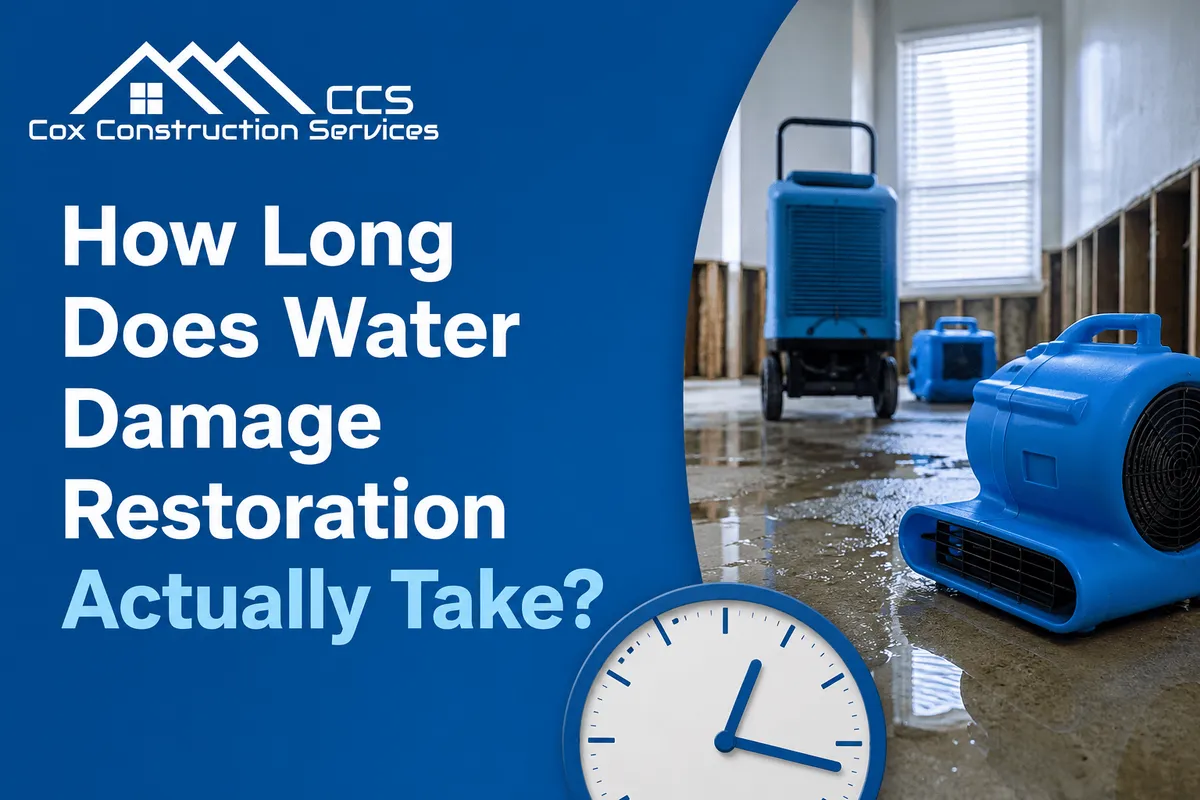
Of all the restoration phases, structural drying takes the longest — typically three to seven days at minimum, sometimes more. Industrial air movers and dehumidifiers run continuously around the clock, and daily moisture readings determine when equipment can safely come out. The structure isn't considered dry when it looks dry. It's dry when calibrated meters confirm moisture levels have returned to normal for those specific materials.
Campbellsville, KY homes vary widely in construction. An older home with plaster walls, original hardwood, and dense insulation holds moisture differently than a newer build with engineered lumber and vinyl plank. A finished basement with framed walls and drop ceilings takes longer to dry than an open concrete space. Rushing drying — or stopping equipment early — is the most common cause of mold problems that appear weeks after the work is supposedly done.
The Restoration Sequence: Stage-by-Stage Timeframes
While every project is different, most water damage restorations follow the same sequence. The table below gives realistic time ranges for each phase — these can overlap or extend depending on what's found along the way.
Assessment and documentation: 2 to 6 hours on day one
Water extraction: 1 to 8 hours depending on volume and access
Structural drying: 3 to 7 days, monitored daily with moisture meters
Mold inspection and treatment, if needed: 1 to 5 additional days
Demolition of unsalvageable materials: 1 to 3 days
Reconstruction and finishing: 1 day to several weeks depending on scope
Conditions That Push the Timeline Beyond the Standard Range
Most restoration projects land within a predictable window. Several specific conditions consistently extend that window, and knowing them in advance sets more accurate expectations.
Contaminated Water
Category 3 water — sewage backups and external flooding — requires full containment, specialized treatment, and mandatory removal of all porous materials. The sanitization steps alone add days that a clean-water job doesn't require.
Mold Found During Demolition
Mold discovered behind walls or under flooring stops reconstruction and triggers a separate remediation process. The demolition scope expands, containment goes up, and air quality testing is required before any rebuild begins.
Multiple Floors or Rooms Affected
Water that travels between levels — through ceilings, into wall cavities, under doors — multiplies both the drying area and the equipment needed to address it. Each additional affected space adds drying time and monitoring complexity.
Weather and Outdoor Humidity
In Campbellsville, KY, high summer humidity or cold winter conditions slow the drying process even with commercial equipment running. Drying in a humid environment requires more dehumidifier capacity and more time to reach acceptable moisture levels.
Insurance Documentation and Approvals
Scope changes that require insurer approval before additional work can proceed create pauses between phases. Starting communication with your adjuster early — and staying in regular contact — is the most effective way to keep the process moving.
Frequently Asked Questions
Can I stay in my home during restoration?
In most cases, yes — provided the damage is contained and the rest of the home is safe. If sewage is involved, mold has been found, or a large portion of the home is affected, temporary relocation may be recommended. Your restoration contractor will advise based on the specific conditions on site.
Will fans and equipment run overnight?
Yes. Commercial drying equipment runs 24 hours a day throughout the drying phase. Stopping it overnight extends total drying time and raises the risk of mold developing before the structure reaches safe moisture levels. Expect continuous noise from air movers during this period.
How do I know when drying is actually finished?
Drying is confirmed by moisture meter readings — not by how things look or feel. Technicians take daily readings from walls, floors, and ceilings and compare them against baseline levels for each material type. Equipment comes out when numbers confirm the structure has dried, not before.
Does the reconstruction have to be handled by the same company?
No. Some homeowners use the restoration company for the full rebuild; others bring in a separate contractor. Either works. The advantage of keeping it with one company is continuity — there's no handoff delay and no gap between what the restoration team documented and what the rebuild team is working from.
What causes the longest delays in the process?
The most common causes are insurance approval delays for expanded scope, permit requirements for structural work, and discovery of conditions like mold or deteriorated framing that require additional steps before reconstruction can begin. Early, proactive communication with your insurer is the best hedge against these slowdowns.
Conclusion
Water damage restoration timelines range from a few days to several weeks, depending on what happened, how quickly work started, and what's found along the way. The single most effective thing a homeowner in Campbellsville, KY can do to shorten that timeline is call immediately — every hour of early drying reduces the chance of mold, material loss, and expanded scope. Cox Construction Services handles every phase from emergency extraction through full reconstruction, with a single team managing the process from start to finish. If water has entered your home, reach out now to get the clock started in the right direction.

Our Services
Service Areas
© 2026 All Rights Reserved | Cox Construction Services
Website Done By: LocalEyes